

Single Post
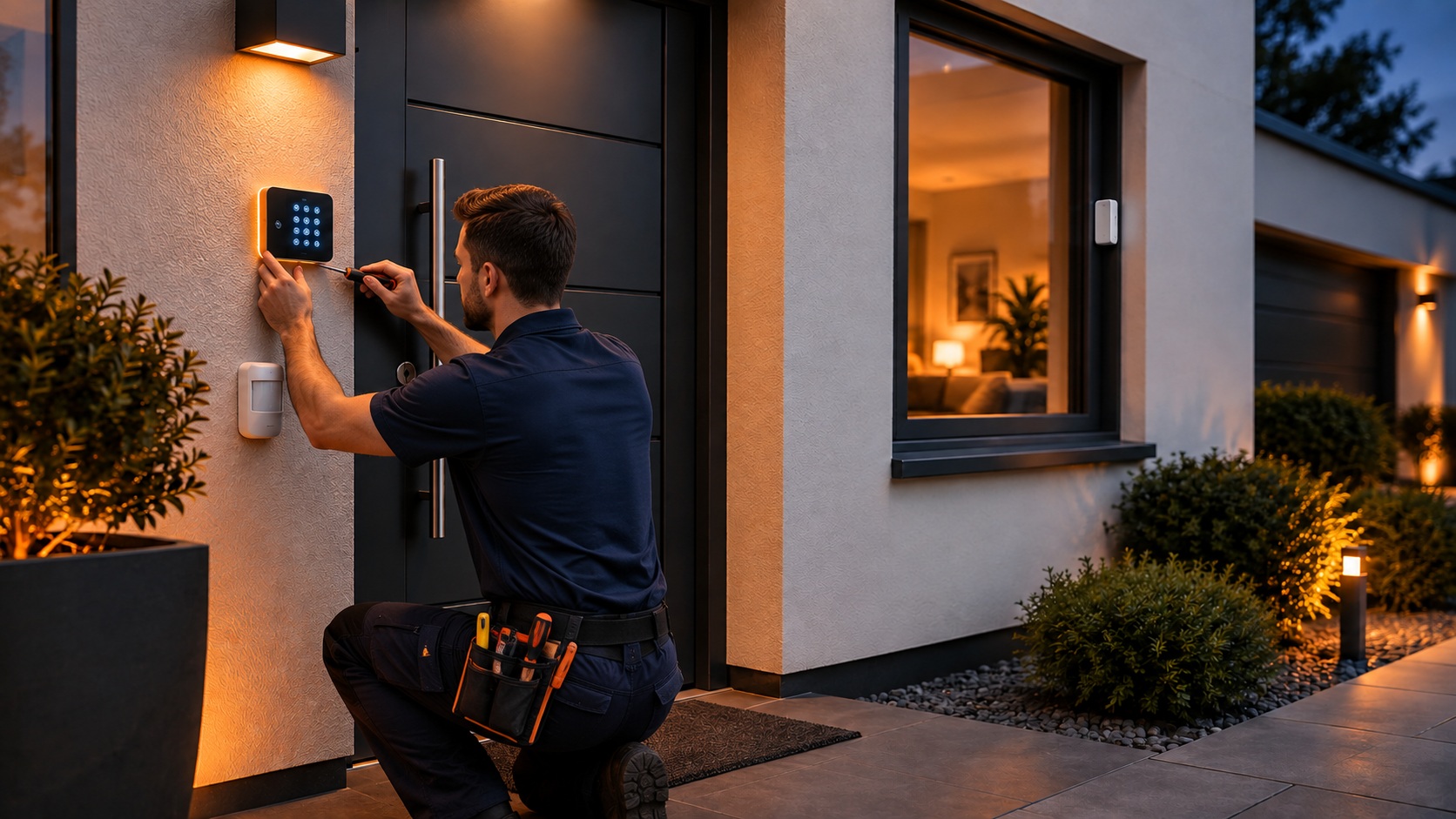
A home alarm system is one of the most effective ways to protect your home when it’s empty — but the options can be confusing. Before you buy a kit or sign a monitoring contract, it helps to decide a few things first. Here’s a simple checklist we walk through with homeowners in Cleveland and Northeast Ohio.
1. Start with your entry points
Most break-ins happen through a door — front, back, side or the door from an attached garage. Ground-floor windows come next, especially those hidden from the street. Walk around your home and list every door and every window that can be reached from the ground. That list tells you how many sensors you actually need.
2. Choose the right sensors
- Door and window contact sensors — trigger the alarm when something opens. Put one on every exterior door.
- Motion detectors — cover a hallway or main room that an intruder would have to cross. One well-placed sensor can protect several windows.
- Glass-break sensors — useful for rooms with large windows or sliding doors.
- Pet-friendly motion sensors — if you have a dog or cat, choose sensors designed to ignore small animals to avoid false alarms.
3. Professional monitoring or self-monitoring?
With self-monitoring, alerts go to your phone and you decide what to do — no monthly fee, but you must be reachable. With professional monitoring, a monitoring center responds and can dispatch help even when you can’t answer. If you travel often or have elderly family members at home, monitoring is usually worth it.
4. Wired or wireless
Wireless systems are faster to install, easy to expand and work well in most homes. Wired systems are very reliable but require running cables, which is easiest during a remodel. Many modern systems combine both.
5. Place the control panel and keypad wisely
Put the keypad near the door you use most, so you can arm and disarm it easily — but keep the main hub out of plain sight from windows, so it isn’t the first thing an intruder sees or reaches.
6. Plan for everyday use
- Can you arm and disarm the system from your phone?
- Does it have an “at home” mode that arms doors and windows but not indoor motion sensors?
- Can family members have their own codes?
- Does it work with your cameras, video doorbell or smart locks?
A system that is easy to use is a system that actually gets armed.
7. Test it after installation
Open every door and window, walk past every motion sensor and confirm each one reports correctly. Then make sure everyone in the household knows how to arm, disarm and cancel a false alarm.
Want help choosing and installing an alarm system? Call 216-848-4474, email manager@bellgrip.com, or see our Surveillance & Alarm Systems services.